



Juggling Two Farminng Styles
Grantville (Lancaster Farming, April 28, 2012): Working at the post office for 24 years, Kirby Reichert used to wish he was outside on a farm. "I would sit there and look out the window and see the sunshine and wonder, Man, what could I be doing out there?' I was 42 and I said, I better do what I want to do while I can do it," he said.
Twenty years later, he's doing what he wants. "I'm as happy as a pig in (expletive)," he exclaimed.
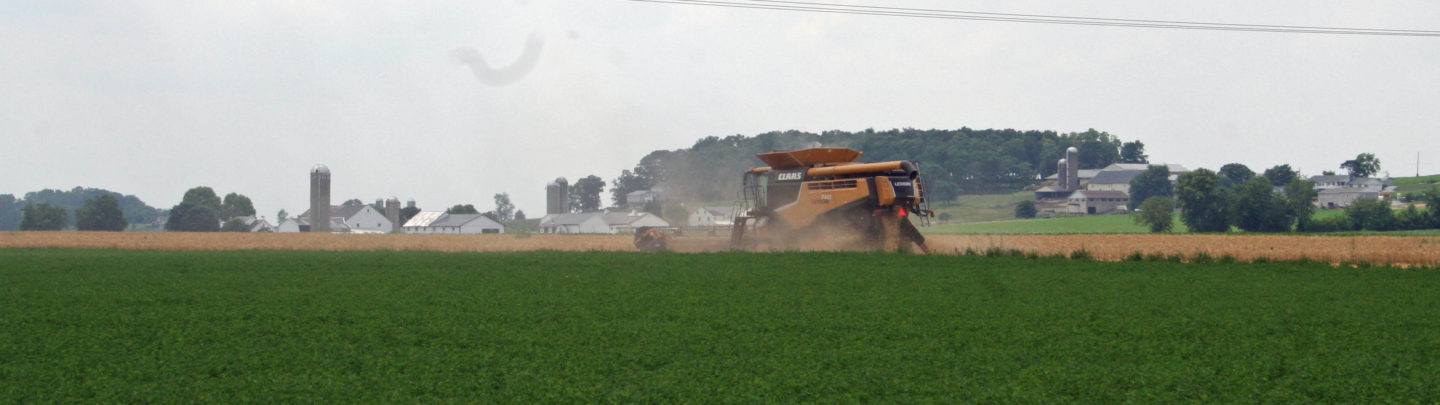
Reichert farms 750 acres spread out over 10 miles around the Dauphin-Lebanon county line near Penn National Race Course.
It's a big operation for one guy, even if he does get some help from his brother and nephew. But it's not just the land he juggles. He's also managing two different systems — conventional and organic. It's something he's been doing since 1998. "Maybe I'm right, maybe I'm wrong. But I'm doing it the way I feel is right," he said.
Groups Weigh In on Farm Bill
Washington (Farm and Dairy, April 27, 2012): Dairy organizations had conflicting things to say about the most recent version of the farm bill, which was approved by the Senate Agriculture Committee April 26.
The Senate legislation includes a new, voluntary margin protection program endorsed by National Milk Producers Federation, to better safeguard farmers against "disastrously low margins" like those seen between 2007-2009. "The Senate has taken a huge step in the right direction by including the dairy reforms modeled after NMPF's Foundation for the Future program," said Jerry Kozak, President and CEO of NMPF, in a statement to media. "We commend Senators (Debbie) Stabenow and (Pat) Roberts for their leadership and diligence in shepherding the farm bill past this point."
Safety net
Kozak said the dairy title contains a better safety net for farmers in the form of the Dairy Production Margin Protection Program, which offers them a basic level of coverage against low margins, as well as a supplemental insurance plan offering higher levels of protection jointly funded by government and farmers.
Child Labor Decision Seen as Win for Farmers
Reading (Reading Eagle, April 28, 2012): Local farming advocates said Friday that they were happy about a federal decision to withdraw a proposed law that farmers believed would have severely limited the ability of youths to do agricultural work. The U.S. Department of Labor on Thursday withdrew proposed regulations that had drawn complaints from farmers in Berks County and nationwide.
Critics said the biggest impact of the law would have been barring children under 16 from operating tractors and other equipment unless they were enrolled in a full-time vocational-agricultural program offered by their local school district or a trade school.
Local farmers realize the need to protect children under 16 from farm-related injuries or deaths, but thought the proposal went too far, said Mena Hautau, extension educator for the Berks County office of the Penn State Extension.
If children aren't allowed to do even basic farm tasks, it makes them much less likely to enter the profession when they get older, she said. "I think the answer here is balance," said Hautau, who offers farm safety courses to children and teens. "Children who grow up on farms should be able to do farm work, but the work should be age appropriate."
Kreider's Continues to Check Out OK
Ephrata (Lancaster Farming, April 28, 2012): Another check of Kreider Farms' egg facilities in Manheim late last week has turned up clean, according to a spokesperson with the Pennsylvania Department of Agriculture. Nicole Bucher, deputy press secretary for the department, said Wednesday that a visit to the farm's Manheim facilities was done that Friday by state veterinarian Dr. Craig Shultz.
Bucher wrote by email that the visit was not an official inspection, but was a visit in the "best interest of public health" and that no official inspection report had been written up. She said it is routine for the Bureau of Animal Health and Diagnostic Service employees to perform follow-up visits per complaints forwarded to the department. Shultz could not be reached for comment.
Laura Koster, spokeswoman for Kreider Farms, said the company is focused on its chicken and egg facilities now that several inspections have cleared the Manheim facility of any major issues.
Farm Bill Approved by Committee; Direct Payments Over
AgWeb, April 26, 2012: The 2012 Farm Bill passed through the Senate Agriculture Committee today 16-4 as amended and is credited to "reducing the deficit by $23 billion dollars," according to Sen. Debbie Stabenow (D-Mich.), chairwoman of the committee. Included in the bill is the elimination of direct payments and an inclusion of risk management options intended to help farmers in times of crisis.
"We've listened to farmers, strengthened crop insurance and made that the centerpiece of risk management," Stabenow said. "We have a risk management tool that supplements crop insurance that will work for farmers and save money." Stabenow
The passing of the bill comes after canceling and rescheduling the Farm Bill Mark-Up, which took place this morning. Jim Wiesemeyer of Informa Economics said that type of chaos is typical for such a large bill. The Farm Bill that passed through the committee this morning was around 900 pages long and several portions were not sitting well with lawmakers, but the committee wanted to get it finished before next week's recess, Wiesemeyer said.
"They wanted to try to soothe the concerns of southern state lawmakers, which they did not because most of them voted against it," he said. "Even some of the northern tier states wanted to juice up the ag risk coverage program. They got what they wanted."
Of Food Supply Risks, Mad Cow Not High on List
Washington, DC (AP, April 25, 2012): If the mad cow found in California has you wondering about food safety, well, there are plenty of problems that pose serious risks to the food supply. But mad cow disease shouldn't be high on the worry list.
Just in the past few months, Americans have been sickened by contaminated sprouts, raw milk and sushi. Thirty people died last year from bacteria-tainted cantaloupe. And when it comes to hamburger, a dangerous strain of E. coli that can lurk in ground beef sickens thousands of people every year.
"What we know is that 3,000 Americans die every year from preventable food-borne illnesses that are not linked" to mad cow disease, said Sarah Klein of the consumer advocacy group Center for Science in the Public Interest. "Things like E. coli, salmonella — that's where we should be focusing our attention, outrage and policy."
The comparable numbers for mad cow disease? Four sick cows ever discovered in the U.S., the one announced Tuesday being the first since 2006, and no human version of the illness linked to eating U.S. beef. "From simply a public health issue, I put it very, very low," Cornell University food safety expert Martin Wiedmann said of the level of concern about mad cow disease. Maintaining confidence in exports fuels the nation's monitoring of the beef supply as much as continuing safety concerns, he said.
